Methamphetamine addiction is one of the hardest addictions to overcome. Not because recovery is impossible, but rather because of the profound changes it causes to the brain and the psychological effort it takes to conquer. If you or a loved one is abusing methamphetamine, you are entitled to treatment that understands all of the elements that you are facing. The meth addiction treatment programs at Meridian Recovery use scientifically validated treatment methods and are designed to assist you from the start of your recovery and every step that follows.
Meth Addiction: Signs, Withdrawal, & Finding Treatment in NJ
Key Takeaways
- Methamphetamine is a powerful synthetic stimulant that floods the brain with dopamine, producing intense euphoria, energy, and long-lasting effects.
- Its high addictive potential comes from rapid dopamine disruption, leading to reduced natural production and the need to keep using to feel normal.
- Signs of meth addiction include extreme energy, weight loss, erratic or paranoid behavior, physical deterioration, and continued use despite serious consequences.
- Withdrawal involves a severe “crash” with fatigue, depression, cravings, and cognitive issues, with acute symptoms lasting 1–2 weeks and psychological effects persisting longer.
- Treatment primarily relies on behavioral therapies and addressing co-occurring mental health conditions, as no FDA-approved medications currently exist for meth addiction.
What Is Methamphetamine?
Methamphetamine is a powerful synthetic stimulant that affects the central nervous system.[1] It shares a close relationship with amphetamine, which is used in treatment for attention-deficit hyperactivity disorder (ADHD) and narcolepsy. However, the effects produced by meth are much more intense and last longer than those produced by amphetamines.[2]
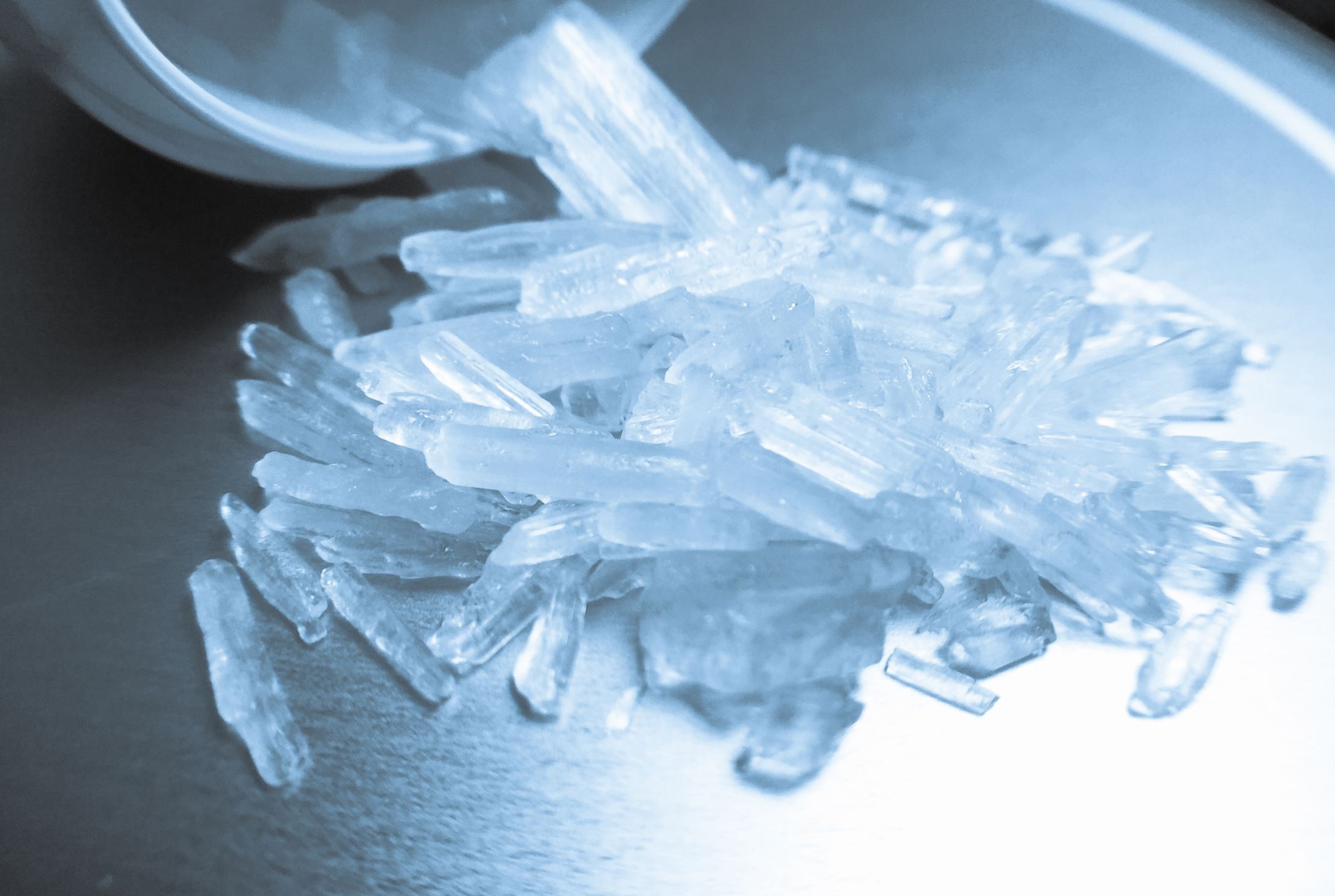
Meth is mostly found as either a white powder or as crystal meth, a crystalline form that is smoked and produces an intense high. It falls under the category of Schedule II controlled substances.[3]
Meth works by flooding the brain with dopamine in quantities far greater than the brain can produce naturally, and blocks dopamine reuptake.[4] This causes a euphoric, energetic, and confident state of mind that can last for several hours. In 2021, research indicated that approximately 2.5 million people in the United States abused meth.[5]
Meth-related overdose deaths have increased significantly over the past decade, particularly when meth is combined with fentanyl.
Methamphetamine Addiction and Abuse
The degree to which meth affects the dopamine system is exactly what makes it such an addictive substance. As a result of continued use and artificial dopamine flooding, the human brain will naturally produce less dopamine and receptor density.
Because of this, any way of finding pleasure or feeling rewarded will be extremely diminished. This is what drives many people to use meth, not just for its euphoric properties, but instead to feel normal.[6] Users are likely to become addicted to meth faster than other types of drug addictions, as well. Many people have reported that they felt hooked after only a few uses.[7]
Some people are more vulnerable to meth addiction than others. Common risk factors include:
- A personal or family history of substance abuse
- A co-existing mental health disorder
- Trauma or chronic stress
- Living in an environment where meth is used.
In New Jersey, the number of people using methamphetamine has increased significantly in both urban areas as well as suburban areas; because of this, New Jersey’s system of addiction treatment has expanded to meet the ever-growing demand.[8]
Signs of Meth Use and Addiction
Meth use can cause dramatic physical changes. Common signs of using and being addicted to meth include:
- An extreme amount of energy and the ability to stay awake for days at a time
- Reduced appetite and rapid weight loss
- Dilated pupils with high body temperature
- An increased heart rate with high blood pressure levels
- Compulsive and repetitive behavior
- Paranoid, agitated, or violent behavior
- Sores on the skin due to compulsive picking
- Extreme levels of tooth decay (often referred to as meth mouth)
- Rapid physical breakdown of exterior appearance
- Withdrawal or being socially isolated from family and friends
- Continuing to use even when there are serious health or life implications
- Inability to stop using even when really wanting to do so
Find a Path Forward in New Jersey
Recovering from a meth addiction takes time and thorough help from medical professionals. But it is possible.
If you are searching for a drug rehab center in New Jersey, Meridian Recovery is here to help you recover fully with the level of care you need. If you or a loved one would like to start the recovery process, our admissions team is here to help you understand your options and insurance benefits and help you take the next step forward.
Meth Psychosis: A Serious Complication of Heavy Use
One of the most clinically serious and alarming complications associated with heavy usage of meth is meth-induced psychosis, which can occur during active use or in the early stages of withdrawal.[9] The symptoms associated with the onset of psychosis can resemble symptoms of a schizophrenic breakdown, including:
- Paranoid delusions, such as believing that you are being watched, followed, or persecuted
- Auditory or visual hallucinations.
- Erratic behavior or extreme agitation
- Incoherent thought processes and speech
- Failing to have insight into the psychosis itself
Psychosis can be resolved with time and treatment. However, in some instances (specifically after long periods of heavy usage), the symptoms may return or continuously persist for weeks to months after stopping usage. The potential for the return of these long-term symptoms highlights the need for effective integrated psychiatric care within a comprehensive treatment program, which is central to the approach at Meridian Recovery.
The Meth Comedown and Withdrawal
Once someone stops using meth after a binge, they will experience a pronounced “crash” as their dopamine levels drop hundreds of times lower than their baseline levels.[10] A “crash” can include extreme fatigue, depression, and intense cravings. In most cases, the withdrawal is not life-threatening; however, the severe psychological toll on the patient creates a substantial incentive to use again, driving the cycle of addiction.
Symptoms of meth withdrawal include:
- Extreme fatigue and excessive need to sleep
- Severe depression and loss of emotion
- Intense cravings
- Increased appetite
- Cognitive difficulties, such as memory loss or difficulty focusing
- Anxiety and irritability
Typically, the acute phase of meth withdrawal lasts one to two weeks. For months after, however, you may continue to experience low mood, the inability to enjoy anything, and cravings as the brain slowly increases dopamine receptor sensitivity.[11] This is why ongoing clinical support and aftercare are such an integral part of treatment.
Meth Addiction Treatment at Meridian Recovery
Effective methamphetamine addiction treatment requires addressing the entire impact of meth on the brain, mental health, and life conditions that may have led to usage in the first place. Meridian Recovery offers individualized, evidence-based treatment in New Jersey that combines behavioral therapy, psychiatric care, and holistic support within our full continuum of care
Behavioral therapy is the most important treatment option for meth addiction since there are no medications that are FDA-approved to treat this addiction.
All services provided by Meridian Recovery are delivered in an outpatient setting. We will provide a thorough evaluation, and if you need a higher level of care for your meth addiction, such as detox or inpatient care, we will quickly coordinate care with one of our trusted partner facilities in the New Jersey area. Once you are medically stabilized, you can transition to our partial hospitalization program (PHP), intensive outpatient program (IOP), or standard outpatient treatment.
Meth and Co-Occurring Disorder Treatment
Problems related to depression, anxiety, PTSD, and psychosis frequently occur along with meth use.[12] If someone attempts to treat their addiction without treating these co-occurring disorders, the chance of relapse increases significantly. Meridian Recovery provides dual diagnosis treatment through a team experienced with the complex relationship between meth and behavioral health.
Frequently Asked Questions About Meth Addiction Treatment
Is there a medication for meth addiction?
There are no approved medications from the FDA for methamphetamine use disorder. Research continues to look at treatments, and some have tested medications like naltrexone and bupropion, but none are approved. As a result, behavioral therapy—especially CBT—is the treatment of choice. However, medications can be used to help with co-existing medical problems like depression, anxiety, or sleeping problems.
What does meth do to the brain long-term?
Long-term use significantly damages the dopamine system. This results in lower concentrations of dopamine receptors and an inability for the body to produce and use dopamine correctly. These conditions show up as a depressed mood, poor cognitive function, and difficulty feeling pleasure (anhedonia). Studies show damage to areas of emotion, impulse control, and decision-making. Fortunately, prolonged abstinence and medical care can help the brain heal, though it can take months to years.
How long does meth recovery take?
There is no fixed timeline. It depends on how long you have used, the intensity of use, your individual biology, and other mental health conditions. Acute withdrawal typically resolves in one to two weeks, but it can take months for the dopamine system to fully recover and for mood and memory to return to normal. Continuing with outpatient treatment and a support system is vital for long-term recovery after completing an initial program.
What is meth psychosis and does it go away?
Meth-induced psychosis is characterized by paranoia and hallucinations during periods of heavy use or the first few days of withdrawal. Patients usually feel better in a few days to several weeks once they stop using; however, after prolonged heavy use, symptoms may sometimes recur. Integrated psychiatric services within a dual-diagnosis program are critical for treating patients with this condition.
Does Meridian Recovery treat meth addiction?
Yes. We provide treatment based on evidence-based techniques through our Partial Hospitalization Program (PHP), Intensive Outpatient Program (IOP), or outpatient program. Our philosophy combines CBT, medication management, trauma-informed practices, and dual-diagnosis treatment. Please contact our admissions department to determine the best level of care for your situation.
Sources
[1] [2] [3] [4] [6] [7] [9] [10] National Institute on Drug Abuse. (2024, November 20). Methamphetamine research report: What is methamphetamine? U.S. Department of Health and Human Services. https://nida.nih.gov/publications/research-reports/methamphetamine/what-methamphetamine
[5] Substance Abuse and Mental Health Services Administration. (2022, December). Key substance use and mental health indicators in the United States: Results from the 2021 National Survey on Drug Use and Health (HHS Publication No. PEP22-07-01-005, NSDUH Series H-57). https://www.samhsa.gov/data/sites/default/files/reports/rpt39443/2021NSDUHFFRRev010323.pdf
[8] New Jersey Department of Human Services. (2025, March). New Jersey drug and alcohol use treatment: Substance use overview 2024 statewide. https://nj.gov/humanservices/dmhas/documents/pdf/statistical/substance-abuse-overview/2024/Statewide.pdf
[11] National Library of Medicine. (2024, December). Withdrawal symptoms in abstinent methamphetamine-dependent subjects. StatPearls. https://pmc.ncbi.nlm.nih.gov/articles/PMC3071736/
[12] National Library of Medicine. (2024, December). Psychiatric comorbidity in methamphetamine dependence. StatPearls [Internet]. https://pmc.ncbi.nlm.nih.gov/articles/PMC3058719/